
How to Find Recently Released Jefferson County Inmates
The Sheriff's Inmate Inquiry is the most practical local lookup. The detail page lists a Release Date field and a Scheduled Release Date field. Searching with the In Custody box unchecked and a wider booking date range can return records of inmates booked in the past year whose status has changed.
To confirm a release, call the right jail: Birmingham at (205) 325-5670 or Bessemer at (205) 481-4160. The portal data updates as bookings and releases post, but verification by phone closes the loop when the question matters for travel, custody, or a pickup.
- Open the Sheriff's Inmate Inquiry portal.
- Search by name with In Custody unchecked.
- Open the detail page and check Release Date and Scheduled Release Date.
- Call the jail to confirm release before relying on the field.
VINELink Release Notifications
VINELink is the free statewide notification system tied into Alabama county jails and state corrections. Sign up with a phone number or email to get an alert when a Jefferson County inmate's custody status changes. The system supports a name or offender ID search and can register multiple notification methods for one case.
| Field | Type | Required | Notes |
|---|---|---|---|
| State / agency selection | Dropdown | Yes | Choose Alabama and the agency or offender type. |
| Name or offender ID | Search | One path required | Common workflow supports either search path. |
| Notification registration | Form | If alerts wanted | Phone, email, or text channel. |
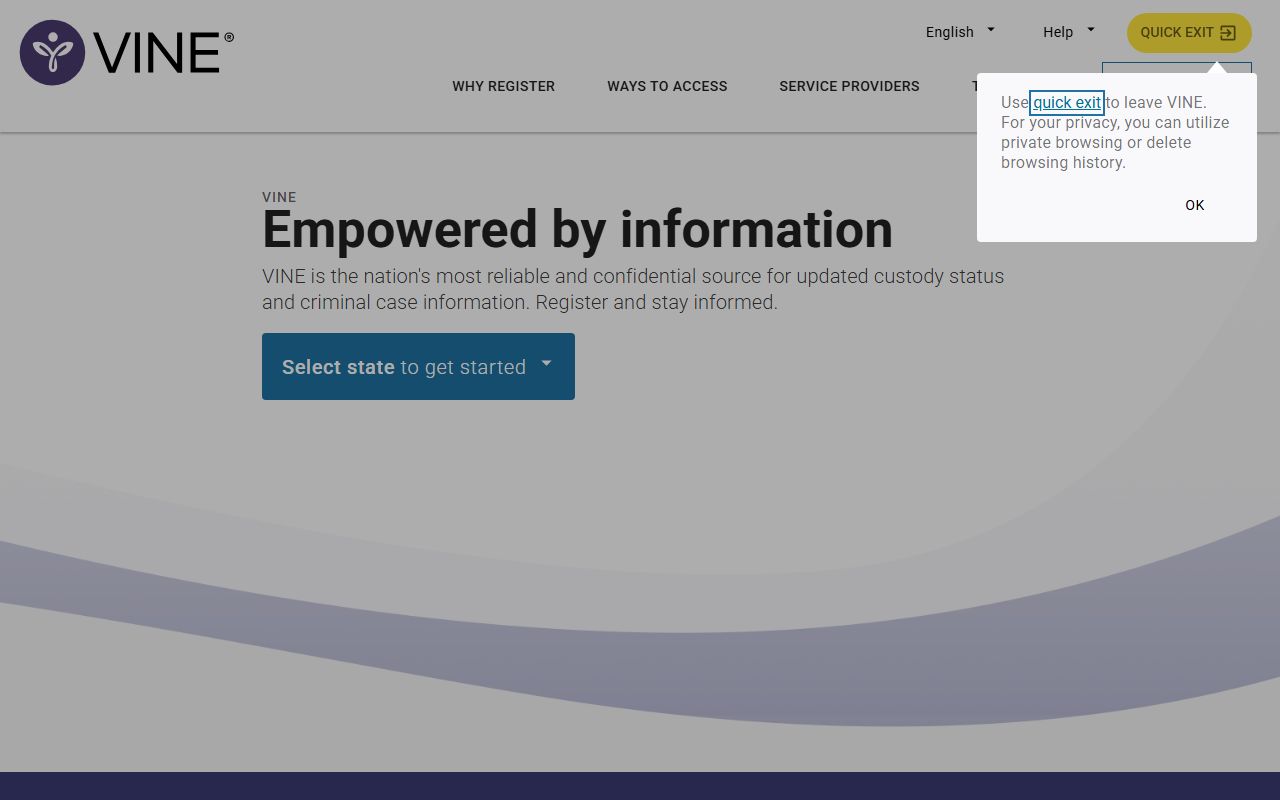
VINELink is the system the Sheriff and DA route victims to when ongoing notice matters for safety.
Searching the Alabama Department of Corrections
Inmates sentenced for state felonies typically transfer to the Alabama Department of Corrections. The ADOC public search supports first name, last name, and AIS number; the AIS number takes precedence when entered. ADOC notes that inmates sentenced under the Youthful Offender Act are excluded from the inmate search and the population totals.
| Field Label | Type | Required | Notes |
|---|---|---|---|
| AIS # | Text | Optional, takes precedence if entered | Max length 8. If entered, name fields are ignored. |
| First Name | Text | Optional | Used when AIS is blank. |
| Last Name | Text | Optional | Used when AIS is blank. |
| Search | Button | N/A | Runs the query. |
Searching the Federal Bureau of Prisons
Federal custody runs through the Bureau of Prisons Inmate Locator. Federal cases out of Jefferson County go through the U.S. District Court for the Northern District of Alabama; people sentenced there serve federal time and show in the BOP system, not in ADOC.
| Field Label | Type | Required | Notes |
|---|---|---|---|
| Find By Number | Tab | Optional | BOP Register Number, DCDC Number, FBI Number, INS Number. |
| Find By Name | Tab | Optional | First, middle, last, race, sex, age. |
| Search | Button | N/A | Searches BOP custody and release records. |
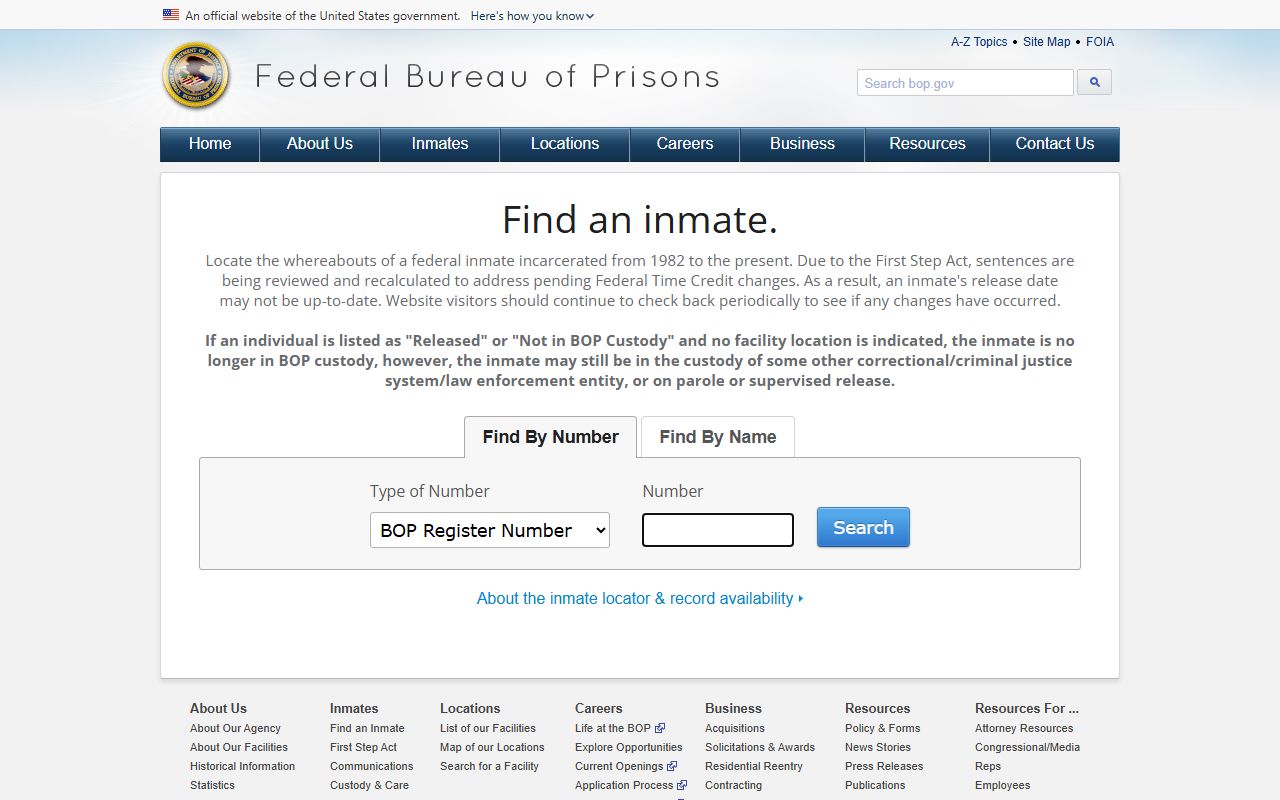
The BOP page includes both number-mode and name-mode tabs and lists the supported identifier types.
Sex Offender Registry After Release
Alabama's sex offender registry is run by the Alabama Law Enforcement Agency under Title 15, Chapter 20A. The registry is searched through the ALEA Community Information Center, which links to the public Sex Offender Search. Registration and community notification continue after the underlying sentence is served.
| Field | Type | Required | Notes |
|---|---|---|---|
| Sex Offender Search | Linked app | N/A | ALEA Community Information Center entry point. |
| Name, address, radius | Interactive | Varies | Confirm fields in the live ALEA app. |
Parole and Probation in Jefferson County
People released from state custody on parole are supervised by the Alabama Board of Pardons and Paroles. People on probation tied to a Jefferson County conviction are usually supervised through state probation officers assigned to the Tenth Judicial Circuit. The Sheriff's Warrant Detail handles parole-violation and probation-violation warrants when supervision is breached, which makes parole and probation status part of the released-inmate picture.
Reentry timelines vary. Some releases come with mandatory supervision; others come with civil-rights consequences like voter rights and gun rights that take separate steps to restore.
Reentry Resources in Jefferson County
Local reentry support runs through several pathways. The Sheriff's Pre-Trial Release Office sits inside both jails. One Place Alabama Metro Family Justice Center at (205) 453-7261 helps domestic and sexual violence survivors and their families with safety planning and legal coordination. Statewide civil legal aid is available through Legal Services Alabama for eligible clients.
The Jefferson County Crime Victims Officer can be reached at (205) 731-2815 for victims who have not received notice of an arrest within 60 days of the initial report. Voting rights restoration in Alabama follows a state-specific process; the Alabama Secretary of State publishes the current form and rules.
Expungement After Release
Once a case is closed and the waiting period has run, some Jefferson County criminal records can be expunged under Alabama Code Title 15, Chapter 27. ALEA publishes the criminal record expungement process at a high level. The petition goes to the court of jurisdiction, and the judge enters the order if the petitioner meets statutory criteria.
Expungement is not automatic and is not full erasure. Criminal-justice agencies can still inspect expunged records under statutory conditions. A lawyer can review eligibility against the conviction history before filing. For more on what expungement does and does not do, see arrest records.
Bond and Pretrial Release Paths
Many releases out of Jefferson County jails happen long before a sentence. Some come through bond posting; others come through the Sheriff's Pre-Trial Release Office. The Corrections page says Pre-Trial Release operates out of both facilities to qualify eligible inmates for release and to assist the public in posting bonds for those who do not qualify. Birmingham Pre-Trial Release: (205) 325-5716. Bessemer jail: (205) 481-4160.
Bond rules sit in Alabama Code Title 15, Chapter 13. A bond may be cash, a surety bond, or a personal recognizance release based on a promise to appear. A pretrial-release order may include reporting, drug testing, or other terms. Breach of those terms can lead to a warrant and a new booking on the Inmate Inquiry.
State Prison Release Verification
State prison releases follow a different timeline than county jail releases. ADOC schedules releases based on sentence credit, parole consideration, and good-time rules; an inmate may move out of ADOC custody and into parole supervision long before the maximum sentence ends. The public ADOC search shows in-custody inmates; a person no longer listed may have been released, paroled, or moved to a community-supervision program.
For ongoing notice, VINELink is the link between the inmate's status change and the public. The system covers state corrections and county jails inside Alabama, and the registration form lets you pick the notification channel that suits you.
Federal Release Verification
The Bureau of Prisons inmate locator covers federal custody. People sentenced in the U.S. District Court for the Northern District of Alabama can serve time at any BOP facility. The locator returns current custody status; a "released" entry shows the release date. Federal halfway houses and home confinement programs may complicate the timeline.
For appeals from federal cases, the Eleventh Circuit Court of Appeals at ca11.uscourts.gov is the next stop. Bankruptcy is handled separately by the U.S. Bankruptcy Court for the Northern District of Alabama at alnb.uscourts.gov.
Civil Rights Restoration After Release
Some Alabama convictions remove civil rights like the right to vote, hold office, or own a firearm. Restoration is not automatic. The Alabama Secretary of State publishes the voter rights restoration process and the form a person must file once eligible. Eligibility depends on the conviction class, the time since sentence completion, and outstanding fines or restitution.
Firearm rights restoration follows a separate state and federal track. Federal disqualifiers under 18 U.S.C. 922(g) survive state restoration in many cases. The cleanest path is a lawyer who can review the conviction history against both state and federal rules.
Note: Civil rights restoration takes paperwork and time. Do not assume an old conviction has cleared on its own; verify status before voting or buying a firearm.